

Psychiatry and therapy are two different types of mental health care, and one is not necessarily superior to the other. Psychiatry is a medical specialty that involves the diagnosis and treatment of mental illness, including the administration of medications (if appropriate). Structured psychotherapy is used to focus on thoughts, emotions, behaviours, relationships and coping skills during therapy. There are individuals who find one approach helpful, and others who find both approaches helpful.
The right choice depends on your symptoms, diagnosis, treatment goals, medical history, preferences, and how much your symptoms affect daily life. A mental health professional can assist to identify where to begin.
Psychiatry vs. Therapy: What Is the Difference?
The main difference is the type of care each approach emphasizes.
Psychiatry is a medical specialty focused on evaluating, diagnosing, and treating mental health conditions. Psychiatrists are physicians, while psychiatric nurse practitioners can also provide psychiatric evaluation and medication management within their scope of practice. Psychiatric care may include medication, monitoring, diagnostic clarification, and coordination with therapy.
Therapy, also called psychotherapy, uses structured conversations and evidence-based techniques to help people understand and change patterns involving thoughts, emotions, behaviors, and relationships. Psychologists, clinical social workers, counselors, and other licensed professionals may provide psychotherapy depending on their credentials and state requirements.
The American Psychological Association notes that psychiatrists, psychologists, social workers, and other qualified professionals may provide psychotherapy, although their education, training, and prescribing authority differ.
What Does a Psychiatrist Do?
A psychiatrist evaluates mental health symptoms from a medical perspective. This can include reviewing psychiatric and medical history, current medications, substance use, sleep, physical symptoms, family history, and changes in mood or behavior.
Psychiatric care may involve:
- Comprehensive psychiatric evaluation
- Diagnostic clarification
- Medication management
- Monitoring medication benefits and side effects
- Treatment planning
- Follow-up appointments
- Coordination with therapists and primary care providers
Psychiatrists can prescribe psychiatric medications because they have medical training. Some psychiatrists also provide psychotherapy, although many psychiatric practices focus primarily on evaluation and medication management.
When Should You See a Psychiatrist?
Consider psychiatric evaluation for persistent, severe, unexplained or interfering symptoms.
Consider psychiatric care if you are having persistent depression, severe anxiety, anxiety attacks, significant mood changes, symptoms of ADHD, symptoms of bipolar disorder, symptoms of trauma, symptoms of OCD, sleep difficulties, and/or concerns about substance use.
A psychiatrist also might be useful if therapy alone hasn’t improved symptoms enough or if you would like to learn whether you might benefit from treatment with medication.
NIMH advises to seek professional assistance if severe and/or distressing symptoms last and interfere with everyday life.
What Does a Therapist Do?
A therapist helps you work through emotional, behavioral, and relationship concerns using psychotherapy.
Therapy can help you:
- Understand unhelpful thought patterns
- Develop healthier coping strategies
- Manage anxiety and stress
- Process difficult experiences
- Improve communication and relationships
- Build emotional regulation skills
- Address behavioral patterns
- Work toward specific personal or treatment goals
Treatment may involve evidence-based psychotherapy, including cognitive behavioral therapy, dialectical behavior therapy, trauma-focused approaches, exposure-based strategies, interpersonal therapy and other approaches based on the individual’s needs.
NIMH emphasizes that people should ask about the rationale and evidence behind a recommended therapy, treatment goals, expected timeframe, and how progress will be evaluated.
When Is Therapy a Good Starting Point?
If you are looking to manage anxiety, stress, grief, relationship issues, life changes, emotional regulation, trauma or behavioural issues, therapy may be a good first step.
Therapy may also be a crucial component of treating diagnosed mental health and wellness issues. In certain cases, psychotherapy could be the only treatment used. Some may benefit from psychiatric treatment, along with medication.
Whether the treatment is appropriate or not depends on the condition and the individual circumstances, and cannot be determined by a simple rule that “therapy is better than drugs”.
Psychiatry vs. Therapy: Key Differences
| Psychiatry | Therapy |
| Medical approach to mental health | Psychotherapeutic approach |
| Psychiatric evaluation | Clinical assessment and psychotherapy |
| Can include medication management | Focuses primarily on therapy |
| Can evaluate medical factors affecting symptoms | Focuses on thoughts, emotions, behaviors, and relationships |
| May involve shorter medication follow-ups | Often involves regular therapy sessions |
| Can coordinate with therapy | Can coordinate with psychiatric care |
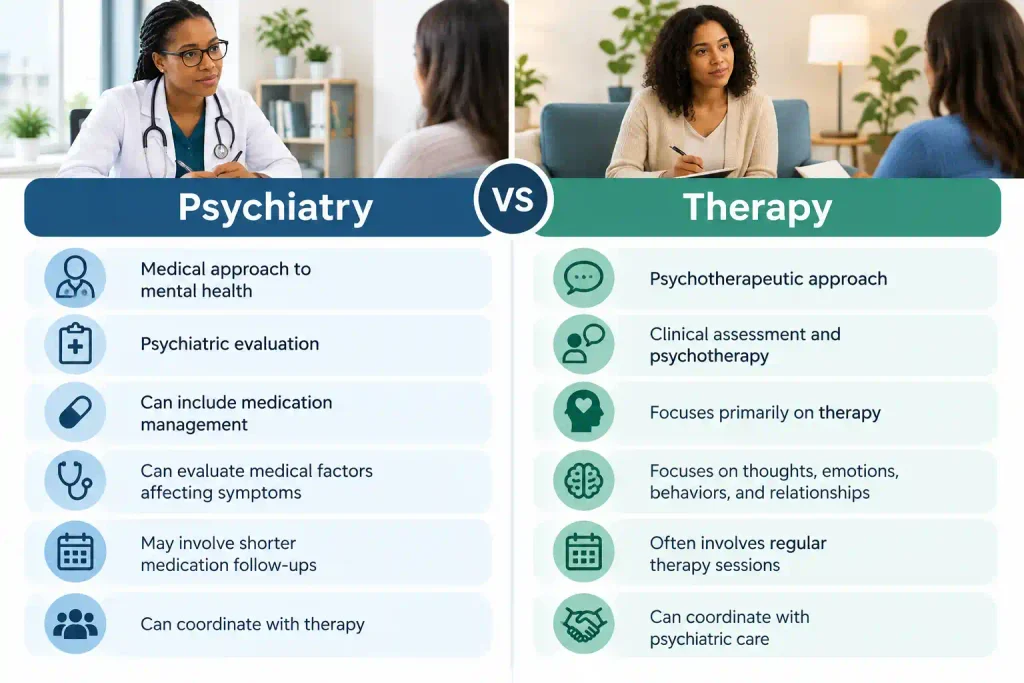
These categories can overlap. Some psychiatrists provide psychotherapy, and some patients receive psychiatric and therapy services at the same time.
Is Medication or Therapy Better for Mental Health?
There is no universal answer.
The best treatment depends on the condition, severity of symptoms, medical history, previous treatment, personal preferences, and response to care.
For some forms of depression and anxiety, psychotherapy can be highly effective. Medication can also help certain people. For conditions such as bipolar disorder and schizophrenia, medication often plays a central role, while psychotherapy can provide additional support for coping and functioning.
The APA explains that psychotherapy, medication, or a combination can be appropriate depending on the problem and available evidence. Treatment decisions should also consider the person’s preferences and ability to continue with the treatment.
Medication also has limitations. It does not work for everyone, side effects can occur, and finding the right medication and dose may require monitoring and adjustment.
Therapy has limitations too. Progress can take time, the therapeutic approach may need adjustment, and therapy may not be sufficient by itself for every condition.
Can You Use Psychiatry and Therapy Together?
Yes. Psychiatry and therapy can complement each other.
For example, someone with depression may receive psychiatric evaluation and medication management while working with a therapist on negative thought patterns, behavioral activation, relationships, and coping skills.
Someone with anxiety may use psychiatric care to evaluate whether medication could help while therapy addresses worry, avoidance, panic symptoms, and coping strategies.
Lumora provides psychiatric evaluation and medication management while coordinating with therapists and other providers when appropriate. Its services also include support for depression, anxiety, ADHD, bipolar disorder, PTSD, OCD, sleep disorders, adjustment disorders, and co-occurring mental health and substance use concerns.
How Do You Know Which Treatment You Need?
You do not need to diagnose yourself before making an appointment.
Start by identifying what you are experiencing and how it affects your life.
Consider Your Symptoms
Persistent sadness, excessive worry, panic, mood changes, concentration problems, intrusive thoughts, sleep problems, or substance use concerns may require professional assessment.
Consider How Symptoms Affect Daily Life
Pay attention to changes in work, school, relationships, sleep, appetite, motivation, concentration, or your ability to complete normal responsibilities.
Consider Whether Medication May Be Appropriate
If symptoms are severe, persistent, or have not improved with therapy alone, a psychiatric evaluation can help determine whether medication or another form of psychiatric treatment may be appropriate.
SAMHSA notes that different mental health professionals provide different types of care and that some professionals can prescribe medication while others primarily provide counseling and therapy.
What Happens During a Psychiatric Evaluation?
A psychiatric evaluation is more than simply deciding whether someone needs medication.
The provider may review your current symptoms, mental health history, medical history, medications, substance use, sleep, family history, daily functioning, and treatment goals. The clinician may also assess safety concerns and consider whether physical health factors could contribute to your symptoms.
The goal is to develop a treatment plan based on your individual needs.
At Lumora, the initial evaluation includes review of symptoms, medical and psychiatric history, substance use history when applicable, lifestyle factors, safety considerations, and treatment goals.
How Long Does Mental Health Treatment Take?
There is no single treatment timeline.
Some people need short-term therapy or psychiatric support for a specific problem. Others need longer-term treatment for conditions that require ongoing monitoring.
Medication may require several follow-up visits to assess benefits, side effects, and whether dosage changes are needed. Therapy may involve weekly or biweekly sessions, followed by less frequent visits as progress develops.
NIMH recommends discussing treatment goals, expected duration, and how progress will be measured with your provider.
The goal is not simply to attend appointments. Effective treatment should be reviewed over time and adjusted when symptoms, goals, or circumstances change.
When Should You Seek Professional Mental Health Care?
Consider speaking with a mental health professional when symptoms persist, become difficult to manage, or interfere with daily life.
Signs that professional support may be helpful include persistent sadness, excessive worry, panic attacks, major sleep changes, difficulty concentrating, loss of interest in activities, significant mood changes, or difficulty completing normal responsibilities.
If you are experiencing thoughts of suicide or urges to hurt yourself, seek immediate help. In the United States, you can call or text 988 for the Suicide & Crisis Lifeline. For an immediate life-threatening emergency, call 911.
Psychiatry and Therapy in Virginia
Lumora Behavioral provides psychiatric care in Richmond and telehealth services across Virginia. Its care model includes psychiatric evaluations, medication management, therapy integration, ADHD care, addiction treatment, and support for several mental health conditions.
This can be useful for people who are unsure whether they need psychiatric care, therapy, or a combination of services. A professional evaluation can help identify an appropriate starting point rather than requiring you to make the decision alone.
If you are looking for psychiatric care in Virginia, you can discuss your symptoms, treatment history, and goals with a qualified provider.
The Bottom Line
Psychiatry and therapy are not competing treatments. They address different aspects of mental health and can work together.
Therapy can help you understand thoughts, emotions, behaviors, relationships, and coping patterns. Psychiatry can provide medical evaluation, diagnosis, medication management, and ongoing monitoring when appropriate.
If you are unsure where to begin, you do not have to make the decision alone. Lumora Behavioral provides personalized psychiatric care, medication management, and coordinated behavioral health support for adolescents and adults in Richmond and across Virginia.
FAQ’s
Is psychiatry better than therapy?
No. Psychiatry and therapy serve different purposes. Some people benefit from therapy alone, some from psychiatric treatment, and others from both.
Should I see a psychiatrist or therapist first?
It depends on your symptoms and goals. Therapy may be a reasonable starting point for many emotional and behavioral concerns. A psychiatric evaluation may be appropriate when symptoms are severe, persistent, complex, or may require medication.
Can a psychiatrist provide therapy?
Yes. Some psychiatrists provide psychotherapy, although many focus primarily on psychiatric evaluation and medication management.
Can a therapist prescribe medication?
Generally, therapists who provide psychotherapy do not prescribe medication. Prescribing authority depends on professional credentials and state law. Psychiatric providers and certain other medical professionals can prescribe medications within their scope of practice.
Is therapy enough for depression?
Therapy can be effective for depression, particularly for many mild to moderate cases. Some people may also benefit from medication or a combination of medication and psychotherapy. Treatment should be individualized.
Can therapy and medication be used together?
Yes. Many people receive psychotherapy and medication as part of the same treatment plan. The combination can be appropriate for certain conditions and symptom patterns.
When should I see a psychiatrist for anxiety?
Consider psychiatric evaluation when anxiety is persistent, severe, significantly affects daily functioning, involves frequent panic attacks, or has not improved enough with therapy or other strategies.
How do I know if I need medication for mental health?
You do not need to decide this yourself. A psychiatric evaluation can review your symptoms, history, medical factors, previous treatments, and goals to determine whether medication should be considered.
Does online psychiatry work?
Telepsychiatry can provide psychiatric evaluation, follow-up care, and medication management when clinically appropriate and permitted by applicable laws and regulations. Lumora offers secure telehealth care across Virginia.
Also Read:
Psychiatric Medication Management in Richmond VA
Best Geriatric Psychiatric Care for Older Adults in Richmond, VA
What Is a Psychiatric Mental Health Nurse Practitioner PMHNP?
Can a Psychiatric Nurse Practitioner Prescribe Medication in Virginia?