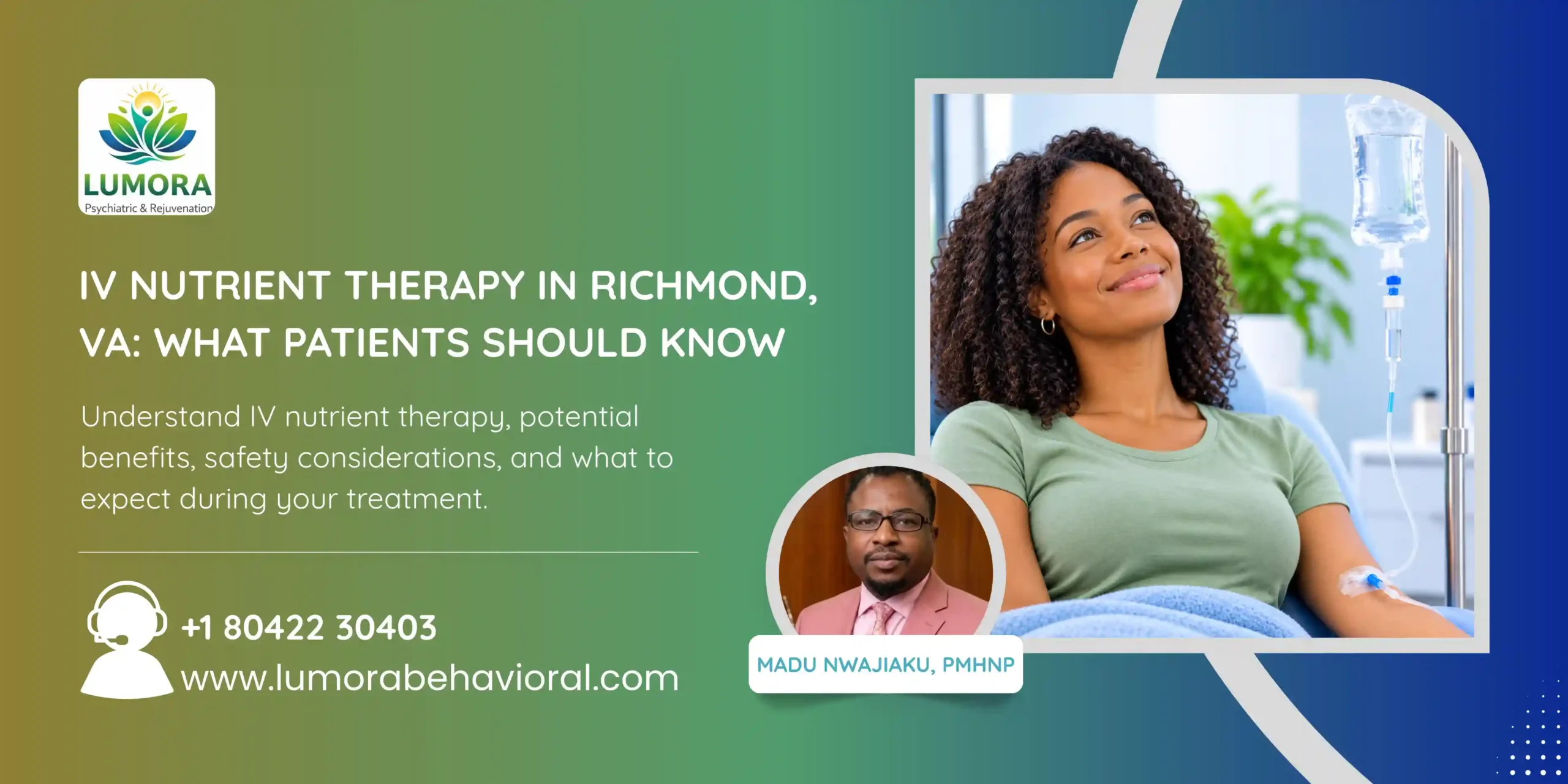
IV therapy is the administration of fluids, electrolytes, vitamins, or other medications via an IV line directly into the bloodstream. Those looking for IV hydration in Richmond VA may want to learn about hydration assistance or medically-monitored nutrient replacement. The appropriate therapy, however, will depend on the patient’s history, clinical picture, and needs.
IV nutrient therapy has become an option at wellness and integrative healthcare practices. Understanding how IV therapy works, what nutrients they can use, the benefits it can offer and the safety concerns are important before scheduling an appointment.
Lumora Behavioral offers IV Nutrient Therapy as part of its broader approach to integrative wellness in Richmond, Virginia. The information provided below will assist you to decide if this service is right for you.
What Is IV Nutrient Therapy and How Does It Work?
IV nutrient therapy is a method of administering fluids and selected nutrients directly into a vein through a small catheter. The intravenous (i/v) variety carries the ingredients to the bloodstream, bypassing the digestive system; while the oral type goes through the digestive system.
A healthcare provider determines whether an infusion is appropriate based on the patient’s medical history, symptoms, nutritional needs, and potential risks.
In general, the procedure includes the insertion of a small IV into a vein, the attachment of the IV to an infusion with the appropriate ingredients and the precise regulation of the infusion rate. The patient is under the supervision of a trained healthcare worker when administered.
IV nutrient therapy differs from standard hospital IV treatment. Intravenous fluids are usually used in the hospital to treat dehydration, to administer medications or to treat certain medical conditions. Vitamins and minerals used in wellness nutrient infusions may be included and provide a benefit based on the ingredients, dose, and clinical requirements of the patient.
No, putting nutrients into the body through an IV doesn’t necessarily mean that your body gets more benefit from them than it does from taking them orally. Depending on the medical indication, the appropriate delivery method is indicated.
What Are the Potential Benefits of IV Nutrient Therapy?
The potential benefits of IV therapy depend on the reason for treatment and the patient’s underlying health condition. Intravenous fluids and nutrients can play an important role in healthcare when a person has a specific medical need.
Hydration and Fluid Replacement
IV fluids can help restore fluid balance when a person cannot adequately replace fluids through drinking. Healthcare providers may recommend intravenous hydration for certain cases of significant dehydration, vomiting, or other conditions that interfere with oral fluid intake.
For mild dehydration, drinking water or using appropriate oral rehydration solutions is generally sufficient.
Targeted Nutrient Replacement
Some people have diagnosed nutritional deficiencies or medical conditions that interfere with nutrient absorption. Depending on the deficiency and clinical circumstances, a healthcare provider may recommend intravenous nutrient administration.
The treatment should address an identified medical need rather than assume that everyone requires additional vitamins.
Support When Oral Supplementation Is Not Appropriate
Certain gastrointestinal conditions, absorption problems, or medical treatments can affect how the body absorbs nutrients. In selected situations, intravenous administration may provide an alternative route for delivering specific nutrients.
Your provider should determine whether IV administration offers a meaningful advantage over oral supplementation.
Individualized Wellness Assessment
An IV therapy consultation can also provide an opportunity to review nutritional concerns, medication use, hydration habits, and general health. This assessment helps identify whether an infusion is appropriate or whether another healthcare approach would be more suitable.
It is important to understand that evidence does not establish routine high-dose vitamin infusions as a reliable way to increase energy, prevent infections, reverse aging, or improve overall wellness in otherwise healthy individuals.
What Nutrients Are Commonly Used in IV Therapy?
The ingredients in an IV infusion vary according to the treatment purpose and clinical requirements. Commonly discussed nutrients include vitamins, minerals, and electrolytes.
Vitamin C
Vitamin C supports normal immune function, collagen formation, and antioxidant activity. Healthcare providers may use vitamin C supplementation to address specific nutritional needs. High-dose intravenous vitamin C requires careful clinical consideration and should not be presented as a proven treatment for general wellness or cancer.
B-Complex Vitamins
B-complex vitamins support several functions, including energy metabolism, red blood cell production, and nervous system function. These vitamins include B1, B2, B3, B5, B6, B7, B9, and B12.
A healthcare provider may consider supplementation when a patient has a documented deficiency or another appropriate clinical indication.
Vitamin B12
Vitamin B12 helps maintain healthy nerve function and supports red blood cell production and DNA synthesis. People with certain absorption disorders or diagnosed deficiencies may require medical supplementation.
The route of administration depends on the cause and severity of the deficiency.
Magnesium
Magnesium supports muscle and nerve function, blood glucose regulation, and normal heart rhythm. Intravenous magnesium may be appropriate for certain medical conditions, but it requires attention to kidney function, dosage, and potential side effects.
Electrolytes
Electrolytes such as sodium, potassium, and chloride help regulate fluid balance, muscle activity, and nerve signaling. Their administration should depend on clinical assessment because excessive or insufficient electrolyte levels can cause serious complications.
Not every IV infusion contains all these ingredients. The formulation should reflect an individual’s health needs rather than a standard combination marketed to everyone.
Who May Be a Candidate for IV Nutrient Therapy?
IV nutrient therapy may be appropriate for selected individuals who have a diagnosed deficiency, absorption difficulty, or another medical indication for intravenous nutrient administration.
A healthcare provider may consider factors such as:
- Diagnosed nutrient deficiencies: Laboratory findings and clinical history may indicate a need for specific nutrient replacement.
- Gastrointestinal absorption problems: Certain digestive conditions can interfere with nutrient absorption through food or oral supplements.
- Difficulty taking oral supplements: Some patients cannot tolerate or appropriately absorb certain oral preparations.
- Medical treatment requirements: Specific conditions may require intravenous administration under professional supervision.
- Individual nutritional concerns: A clinical evaluation can help determine whether supplementation is necessary and which delivery method is appropriate.
IV therapy is not suitable for everyone. People with kidney disease, heart conditions, liver disease, fluid-balance disorders, or certain medication interactions may need additional evaluation before receiving an infusion.
Pregnant or breastfeeding individuals should also discuss potential treatments with their healthcare providers before considering intravenous supplements.
What Happens During an IV Therapy Appointment?
Understanding the appointment process can help you feel more comfortable before visiting an IV therapy clinic in Richmond, VA.
1. Initial Health Assessment
The provider reviews your medical history, current symptoms, existing health conditions, allergies, and medications. They may also ask about previous supplements or IV treatments.
This step helps identify potential risks and determine whether intravenous treatment is appropriate.
2. Discussing Your Nutritional Needs
Your provider discusses your concerns and treatment goals. Depending on your circumstances, they may recommend reviewing laboratory results or obtaining additional testing before selecting a nutrient formulation.
Not everyone needs laboratory testing, but providers should order it when clinical findings indicate that additional information is necessary.
3. Selecting an Appropriate Infusion
If IV therapy is appropriate, the provider determines which ingredients, dosage, and infusion method meet your clinical needs.
You should receive an explanation of the proposed treatment, its potential benefits, limitations, and possible side effects before administration.
4. Receiving the IV Infusion
A qualified healthcare professional places a small catheter into a vein, usually in the arm or hand. The prescribed fluid or nutrient solution then enters the bloodstream at a controlled rate.
The provider monitors the infusion and checks for discomfort or unexpected reactions.
5. Post-Treatment Guidance
After the infusion, your provider may discuss hydration, follow-up care, and any symptoms that require medical attention. The need for additional treatment depends on your clinical condition and response.
Is IV Vitamin Therapy Safe?
IV therapy can be administered safely in appropriate clinical settings when qualified healthcare professionals follow proper screening, dosing, sterile preparation, and monitoring procedures. However, intravenous administration carries risks that patients should understand before treatment.
Potential complications include:
- Infection: Bacteria can enter the body through an improperly handled IV catheter or contaminated preparation.
- Vein irritation: The catheter or infused solution may cause discomfort, inflammation, or irritation around the insertion site.
- Allergic reactions: Some individuals may react to specific vitamins, minerals, medications, or other infusion ingredients.
- Fluid overload: Excessive intravenous fluid can create problems for people with certain heart, kidney, or liver conditions.
- Electrolyte disturbances: Incorrect nutrient or electrolyte concentrations can affect normal body functions.
- Medication interactions: Certain ingredients may interact with prescription medications or existing treatments.
The American College of Clinical Pharmacology has highlighted safety concerns involving vitamin infusion clinics, including infection risks, adverse reactions, and inadequate clinical oversight.
Choose a provider who reviews your health history, explains the ingredients, uses properly prepared products, and monitors you during treatment. You should also receive clear instructions about possible reactions after leaving the clinic.
IV Therapy vs. Oral Supplements: What Is the Difference?
Both IV therapy and oral supplements can deliver nutrients, but they use different administration methods.
Oral supplements are administered into the digestive system and the nutrients are absorbed into the bloodstream. The selected ingredients are directly delivered to the bloodstream via IV.
IV administration may be useful when a person cannot absorb or tolerate oral nutrients or requires a medically indicated intravenous treatment. But, the short-cut to digestion does not necessarily equal better health.
In cases where nutrient status is normal, and digestive function is not impaired, oral supplements or a balanced diet may be sufficient. IV vitamin therapy at high doses has not shown to be a consistent health benefit to people who are healthy and don’t have a medical reason.
A healthcare provider can help determine which option is appropriate based on your nutritional status and overall health.
How Much Does IV Therapy Cost in Richmond, VA?
IV therapy Richmond VA cost depends on several factors including treatment, ingredients, dosage, clinical diagnosis and the provider.
Hydration, special nutrient infusions and medically-prescribed treatments could be priced differently. There may also be additional consultation fees or laboratory fees.
Prior to scheduling, inquire with the clinic about the cost of the entire treatment, what the quoted price encompasses, whether there is a need for further testing and whether insurance will cover any medically indicated services.
Price is not the sole basis for selection of an infusion. Qualifications, transparency of ingredients, sterile preparation and appropriate medical screening are factors to consider.
Please contact Lumora Behavioral for current availability and pricing of IV Nutrient Therapy.
Explore IV Nutrient Therapy at Lumora Behavioral
Choosing an IV therapy provider involves more than comparing infusion ingredients or prices. Understanding your health needs, reviewing potential risks, and receiving appropriate clinical guidance are important parts of making an informed decision.
Lumora Behavioral brings psychiatric care and integrative wellness together through a PMHNP-led approach. Its IV Nutrient Therapy service is part of a broader focus on individualized care and physical wellness.
If you are considering IV nutrient therapy in Richmond, VA, contact Lumora Behavioral to discuss your needs, available treatment options, and whether an initial consultation is appropriate.
Schedule a consultation with Lumora Behavioral to learn more about IV Nutrient Therapy and available wellness services.
Frequently Asked Questions
What is the difference between IV hydration and IV nutrient therapy?
IV hydration primarily delivers fluids and electrolytes to help address fluid loss. IV nutrient therapy administers selected vitamins or minerals through a vein when clinically appropriate. Some infusions may contain both fluids and nutrients.
How long does an IV therapy appointment take?
The appointment duration depends on the infusion volume, ingredients, delivery rate, and required monitoring. Ask your provider about the expected appointment time before scheduling.
Is IV vitamin therapy better than taking oral supplements?
Not necessarily. IV administration bypasses the digestive system, but it does not guarantee better health outcomes. Oral supplements may be sufficient for people who can absorb nutrients normally.
Can IV therapy help with fatigue?
Fatigue has many possible causes, including sleep problems, anemia, thyroid disorders, medication effects, and mental health conditions. IV nutrient therapy is not a proven general treatment for fatigue. A healthcare evaluation can help identify the underlying cause.
Who should avoid IV nutrient therapy?
People with certain kidney, heart, or liver conditions, fluid-balance disorders, allergies, or medication interactions may face additional risks. A healthcare provider should evaluate these factors before recommending treatment.
Does IV nutrient therapy require a medical consultation?
Yes. An appropriate health assessment helps determine whether an infusion is suitable, which ingredients may be needed, and whether additional precautions or testing are necessary.
Where can I find IV nutrient therapy in Richmond, VA?
Lumora Behavioral offers IV Nutrient Therapy as part of its integrative wellness services in Richmond, Virginia. Contact the practice to ask about eligibility, treatment options, and appointment availability.