
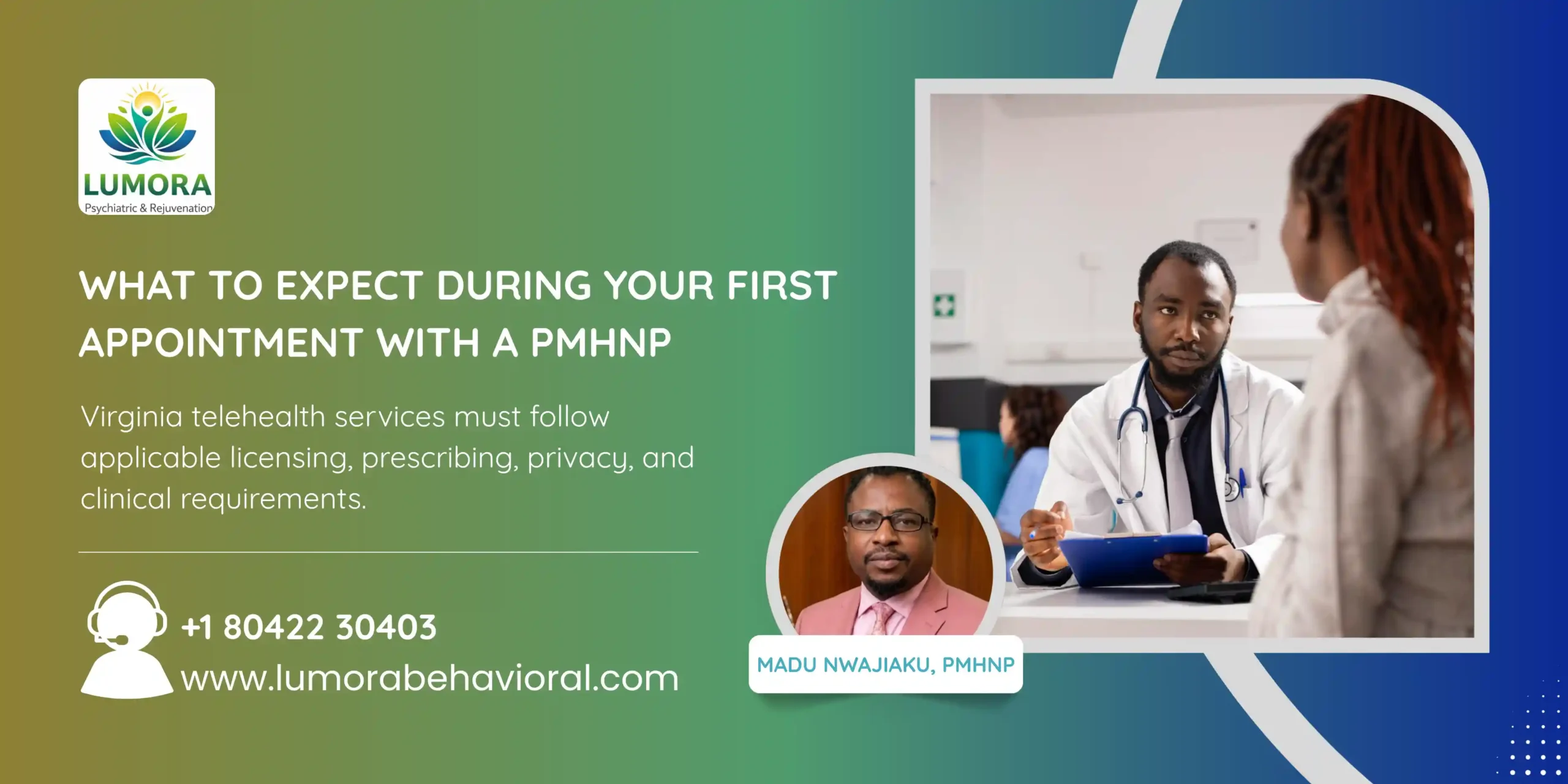
Your first appointment with a Psychiatric Mental Health Nurse Practitioner (PMHNP) is an opportunity to discuss your mental health concerns, review your medical history, and understand possible treatment options. Your provider will ask you about your symptoms, medicines and treatment history, lifestyle and goals during this first psychiatric assessment to create a plan for your care.
If you are scheduling your first psychiatric appointment, you may feel nervous about what to say, what questions you will be asked, or whether you will need medication. This is a worry that many share. Understanding the evaluation process can help you feel more prepared and comfortable when meeting with a psychiatric provider.
What Is a PMHNP and How Can They Help?
A Psychiatric Mental Health Nurse Practitioner (PMHNP) is an advanced practice registered nurse with specialized education and clinical training in mental health care. PMHNPs evaluate, diagnose, and manage mental health disorders within their scope of practice.
Their duties can vary from psychiatric assessments, medication management, treatment planning, to providing continuous mental health care depending on their level of training, the clinical environment, and state regulations.
A PMHNP might assess anxiety, depression, bipolar disorder, attention-deficit/hyperactivity disorder (ADHD), post-traumatic stress disorder (PTSD) and other psychiatric issues.
A PMHNP can also assess the need for psychiatric medication, while a therapist’s bottom line would be therapy. Medication management may be indicated for some patients, and referrals for psychotherapy or other services are needed for some. Treatment is dependent on clinical needs.
How to Prepare for Your First PMHNP Appointment
Preparing a few details before your appointment can help your provider understand your concerns more clearly. You do not need to organize your entire medical history or memorize everything you want to discuss.
Consider preparing the following information:
Current symptoms: Write down what you have been experiencing, when the symptoms started, how frequently they occur, and whether they have changed over time.
Previous diagnoses: Share any mental health diagnoses you have received and explain whether you have experienced similar symptoms before.
Medication information: Prepare a list of prescription medications, over-the-counter medicines, vitamins, and supplements, including dosages when available.
Previous treatments: Mention any psychiatric medications, counseling, hospitalizations, or other treatments you have received and how they affected you.
Medical history: Include relevant medical conditions, allergies, sleep problems, and other health concerns that could affect your mental health treatment.
Family history: Share any known family history of mental health conditions that may help your provider understand potential risk factors.
Personal questions: Write down questions about diagnosis, medication, treatment options, costs, or follow-up appointments.
Bring previous medical records or psychiatric evaluations if you have them. You can also bring a trusted support person if appropriate and permitted by the provider.
Also Read: Benefits of Seeing a PMHNP for Mental Health Care
What Happens During Your First Psychiatric Evaluation?
Your first psychiatric evaluation usually involves a structured conversation and clinical assessment. Your PMHNP will gather information about your symptoms, medical background, mental health history, and daily functioning before recommending treatment.
1. Discussing Your Symptoms and Current Concerns
Your provider will begin by asking what brought you to the appointment. You may discuss changes in your mood, anxiety, concentration, sleep, motivation, behavior, or emotional responses.
Common questions include:
- When did you first notice these symptoms?
- How often do you experience them?
- Have they become more difficult to manage?
- Do they affect your work, relationships, or daily activities?
- Are there specific situations that make your symptoms worse?
These questions help your PMHNP understand the severity, frequency, and possible causes of your concerns. Try to describe your experiences honestly, even if you find them difficult to explain.
2. Reviewing Your Medical and Mental Health History
Your PMHNP will review your previous medical conditions, psychiatric diagnoses, family history, and treatment experiences.
Previous counseling, psychiatric medications, emergency visits, hospitalizations may be queried. Your provider also might ask if past treatments were effective, if they had side effects, or if they did not help.
This information can be used to recognise patterns and potential factors that can impact mental health. Other physical health issues, medications, and hormonal and neurological changes can also be responsible for psychiatric symptoms.
3. Understanding Your Medications and Lifestyle
Medication and lifestyle discussions are important parts of a psychiatric evaluation. Your provider might ask about drugs or medicine you take, vitamins, alcohol, cannabis, or cigarettes or tobacco.
The following questions are not being used as an assessment of your answers. They can identify potential interactions, substance-related symptoms and factors that may potentially impact the safety of the medication(s).
You can also mention sleeping problems, diet, exercise, job duties, family life, and recent stressful events. These can affect mood, concentration, energy and emotional well-being.
4. Completing a Mental Status Examination
A mental status examination is a clinical assessment that helps your provider understand your current emotional and cognitive functioning.
Your PMHNP may observe or assess:
- Appearance and behavior: General presentation, cooperation, eye contact, and behavior during the appointment.
- Mood and emotional expression: How you describe your feelings and how your emotions appear during the conversation.
- Speech: Speech patterns, clarity, pace, and communication.
- Thought processes: How you organize and communicate your thoughts.
- Attention and concentration: Your ability to focus and respond to questions.
- Perception and awareness: Possible changes in how you experience or interpret your surroundings.
- Insight and judgment: Your understanding of your concerns and ability to consider decisions.
This assessment is not a test that you need to pass. It provides additional clinical information that helps your provider understand your mental health.
5. Discussing Safety and Personal Well-Being
Your provider may ask direct questions about suicidal thoughts, self-harm, past attempts, or thoughts of harming someone else.
These questions form an important part of responsible psychiatric care. They help your PMHNP understand whether you need additional support, safety planning, or urgent intervention.
You should answer as honestly as possible. If you are experiencing immediate danger or cannot keep yourself safe, seek emergency assistance rather than waiting for a routine appointment.
What Questions Should You Ask Your PMHNP?
Your first appointment should also give you an opportunity to understand your care options. You do not have to wait until your provider finishes the evaluation to ask questions.
Consider asking:
- What could be contributing to my symptoms?
- Do I need additional assessments before receiving a diagnosis?
- What treatment options may be appropriate for my condition?
- Would medication help, and what side effects should I understand?
- How will we monitor my progress?
- When should I schedule my next appointment?
- What should I do if my symptoms become worse between visits?
Understanding these details helps you participate in treatment decisions and develop realistic expectations.
Will You Receive a Diagnosis or Medication During Your First Visit?
You may receive an initial diagnosis during your first psychiatric appointment if your symptoms and clinical history provide enough information. Other conditions, however, may need further evaluation, medical history, screening or a follow-up visit to get a clear conclusion.
If clinically appropriate, during the first appointment the PMHNP may prescribe medication. But it is not automatic that a prescription will be given.
Treatment options can include psychiatric medication, medication monitoring, lifestyle recommendations, psychotherapy referrals, further evaluations, or a combination of such treatments.
If your provider suggests using a medication, he or she should tell you what it is for, what you hope to gain from taking it, what side effects you might experience, and the monitoring needs. There should be room to discuss your concerns prior to deciding on treatment.
The aim is to select the method that will alleviate symptoms and take into account medical history, preferences and general health.
What Happens After Your First Psychiatric Appointment?
After the evaluation, your PMHNP will discuss the findings and recommend appropriate next steps. This can include the initial treatment plan, management of medication, further assessment or referral to another mental health provider.
Follow-up appointments allow your provider to track improvement in your symptoms, how your treatment is going, how well your medicines are working, and any side effects.
Some medications require time before their full benefits become noticeable. Your provider might need to try a different medication or reduce the dose if you do not respond to the medication. There could be a difference in the rate of treatment and progress, and it may take a continuous process of communication to find an appropriate approach.
It’s important to avoid changing medications without consulting your provider about any unusual side effects or changes in symptoms you may be experiencing.
What to Expect During a Virtual PMHNP Appointment in Virginia
Telepsychiatry allows eligible patients to meet with a psychiatric provider through secure video appointments instead of traveling to a clinic.
Before your virtual appointment, find a quiet and private location with a reliable internet connection. Keep your medication list and relevant medical records nearby. Your provider may also ask you to confirm your identity and current physical location.
Virginia telehealth services must follow applicable licensing, prescribing, privacy, and clinical requirements. Your provider will determine whether a virtual evaluation is appropriate for your needs.
Lumora Behavioral Health offers in-person psychiatric care in Richmond and telepsychiatry options for eligible patients across Virginia.
Take the First Step Toward Psychiatric Care at Lumora Behavioral
Your first appointment with a PMHNP is an important opportunity to understand your mental health concerns, discuss your treatment preferences, and identify appropriate next steps. You do not need to have every answer before attending. Sharing your experiences openly can help your provider develop a clearer understanding of your needs.
At Lumora Behavioral, we provide personalized psychiatric evaluations, medication management, and ongoing mental health support for individuals in Richmond and across Virginia. Our PMHNP-led approach considers your symptoms, medical history, and personal treatment goals when planning your care.
If you are ready to discuss your mental health concerns, contact Lumora Behavioral to schedule your psychiatric evaluation. Our team can help you understand the available care options and prepare for your first appointment.
Frequently Asked Questions
How long does a first appointment with a PMHNP take?
The length varies depending on the complexity of your symptoms, medical history, and evaluation needs. Initial psychiatric appointments generally require more time than routine follow-up visits because the provider must gather detailed clinical information.
What questions does a PMHNP ask during the first appointment?
A PMHNP may ask about your current symptoms, sleep, mood, concentration, medical history, previous diagnoses, medications, family history, substance use, and daily functioning. Safety-related questions may also be included.
Can a PMHNP diagnose mental health conditions?
Yes. PMHNPs can assess and diagnose mental health conditions within their authorized scope of practice. They use clinical interviews, medical history, symptom assessments, and other relevant information to guide diagnostic decisions.
Will a PMHNP prescribe medication during the first appointment?
A PMHNP may prescribe medication during the initial visit when clinically appropriate and permitted by state regulations. However, some patients need additional evaluation before a medication decision is made.
Should I bring medical records to my first psychiatric appointment?
Yes. Previous psychiatric evaluations, medication lists, relevant medical records, and information about past treatments can help your provider understand your health history and make informed recommendations.
Is my first psychiatric appointment confidential?
Mental health appointments generally receive privacy protections under HIPAA when provided by a covered healthcare entity. However, certain legal and safety-related exceptions may apply, including circumstances involving serious and imminent threats. Your provider can explain the applicable privacy practices.
Can I see a PMHNP online in Virginia?
Eligible patients can access psychiatric care through telehealth in Virginia. Virtual appointments may support psychiatric evaluations, medication management, and follow-up care when the provider determines that remote treatment is clinically appropriate.
Also Read:
Mental Health Clinic Richmond, VA
7 Questions to Ask Before Meeting a Psychiatric Nurse Practitioner in Virginia
Psychiatric Medication Management in Richmond VA
Best Geriatric Psychiatric Care for Older Adults in Richmond, VA