
The best geriatric psychiatric care for older Richmond, VA residents is furnished by a board-certified psychiatrist who has a special interest in geriatric mental health, careful assessment that differentiates medical from psychiatric conditions, and a treatment program tailored to the individual’s cognition, medications and lifestyle, rather than a cookie-cutter approach. Lumara Behavioral Health offers this type of care during in clinic visits and telepsychiatry sessions for seniors throughout the Richmond area.
The brain, and the body, likewise changes as we age, making symptoms of psychiatric illness simple to miss or misinterpret in older adults. The geriatric psychiatrist is able to differentiate between normal ageing, a side effect of a medication, the presence of an undiagnosed medical condition and a psychiatric disorder. That’s important because the treatment is based on the diagnosis and if it’s a wrong diagnosis it’s a wrong treatment.
What Geriatric Psychiatric Care Actually Treats
Geriatric psychiatry is a subspecialty of Psychiatry that deals with adults that are usually 65 years and above. It covers depression and anxiety, mental illness and psychiatric syndromes in dementia, grief reactions, psychiatric side effects of medication and late onset mental illness. It is also an understanding of the interaction between the physical health, multiple medications and cognitive changes in ways unique to older adults and their mental health.
How It Differs From General Psychiatry
In general psychiatry, adults of all ages are treated with standard diagnostic criteria, and with the same dosage of medication. Geriatric psychiatry makes allowances for older people being more sensitive to drugs and side effects, having slower drug metabolism, sensitivity to other drugs, and higher incidence of psychiatric symptoms occurring alongside other physical diseases such as thyroid disease, vitamin deficiencies, early dementia, etc. In geriatric psychiatry, cognition is examined during each appointment, and this is not the case in regular adult psychiatric visits.
9 Warning Signs an Older Adult May Need a Geriatric Psychiatrist
Not every change in an older adult is a normal part of aging. These patterns, especially when they last more than two weeks or represent a clear shift from a person’s baseline, are reasons to schedule a psychiatric evaluation.
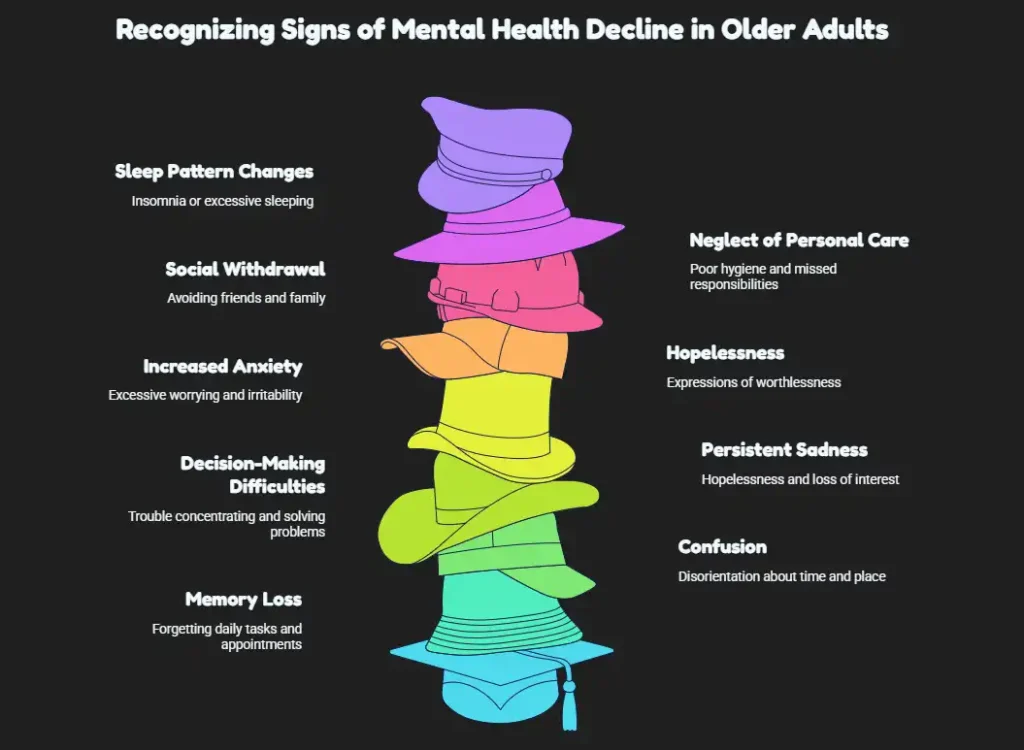
1. Memory loss that disrupts daily life
Forgetting medications, bills, appointments, or important tasks.
2. Confusion about time, place, or familiar routines
Getting lost, forgetting dates, or becoming disoriented.
3. Difficulty making decisions or following conversations
Trouble concentrating, solving problems, or understanding discussions.
4. Persistent sadness or loss of interest
Feeling hopeless or no longer enjoying hobbies and activities.
5. Increased anxiety, irritability, or agitation
Excessive worrying, mood swings, or becoming easily frustrated.
6. Talking about hopelessness or not wanting to live
Expressions of worthlessness or thoughts that life isn’t worth living.
7. Withdrawing from family and social activities
Avoiding friends, family gatherings, or favorite activities.
8. Neglecting personal care or daily responsibilities
Poor hygiene, skipped meals, missed medications, or an unclean home.
9. Significant changes in sleep patterns
Difficulty sleeping (insomnia) or sleeping much more than usual.
Is It Normal Aging or a Psychiatric Symptom?
Occasional forgetfulness, needing more time to process information, or feeling tired after a busy day are typical parts of aging. A symptom is a concern when it is persistent, progressive, or negatively impacts independence and safety. If someone is unable to take medications properly, or is lost in familiar surroundings, no longer eating regularly, or talking about wanting to quit, it’s not a normal part of being old and shouldn’t be taken lightly, but is a symptom of the need for a professional evaluation.
Common Conditions We Treat in Older Adults
Depression and Anxiety in Seniors
One reason for why older adults may not be diagnosed with depression is that it usually presents itself as something other than sadness, such as irritability, fatigue or physical complaints. Anxiety may manifest as restlessness, excessive concern with health, financial concerns, and/or sudden fear to leave home. They can be treated with appropriate medication and therapy.
Dementia-Related Behavioral and Mood Symptoms
Dementia is a neurological disorder, however the behavioural and psychological symptoms that accompany it, such as agitation, paranoia, depression and sleep disturbance are within the scope of geriatric psychiatry. With proper treatment, the patient can live a more fulfilling life and lessen family caregiver strain.
Grief, Loneliness, and Adjustment Difficulties
Loss of a spouse, retirement, declining independence, and social isolation are common triggers for late-life depression and anxiety. Grief counseling and structured support help older adults process these transitions instead of withdrawing further.
What Happens During a Geriatric Psychiatric Evaluation
A first evaluation typically includes a review of psychiatric and medical history, a current medication list, a cognitive screening, and a conversation about mood, sleep, appetite, and daily functioning. A family member or caregiver can provide input that the patient may not have considered, with permission.
What We Ask, and Why
Medications are important because many of the psychiatric symptoms in older people are a result of drug interactions and not a new psychiatric disorder. Losses in the past year, living situation and social contacts are asked as these factors are among the strongest predictors of late-life depression. Memory and function are considered because it is important to differentiate depression from early dementia, as this will impact treatment.
Trusted Treatment Approaches for Older Adults
Careful Medication Management
Older adults metabolize medications differently and are more sensitive to side effects and interactions. Geriatric psychiatric medication management starts at lower doses, adjusts gradually, and reviews the full medication list at every visit to reduce the risk of adverse reactions.
Psychotherapy Adapted for Older Adults
Cognitive behavioral therapy and problem-solving therapy are well studied in older populations and are adapted here for pace, hearing or vision limitations, and life-stage-specific concerns like grief, caregiving stress, and loss of independence.
Family and Caregiver Involvement
With the patient’s consent, families are included in care planning. This helps identify symptoms the patient may minimize and supports consistency in the home between appointments.
Telepsychiatry Across Virginia
Telepsychiatry gives homebound or mobility-limited seniors access to the same evaluation and follow-up care as an in-person visit, using a secure video connection from home. This has become a standard part of accessible senior mental health care in Virginia.
What to Realistically Expect From Treatment
Change is typically a slow process. In older people, medications are adjusted slowly and carefully and sometimes a few weeks are needed to get the correct dose. Results are usually evident after 8 to 12 sessions, and the exact duration of therapy depends on the specific condition and its severity.
While geriatric psychiatry can help clarify a diagnosis, it cannot cure dementia and cannot substitute for medical treatment for disorders such as thyroid problems and vitamin deficiencies which may mimic psychiatric symptoms. What it can do is to be able to make an accurate diagnosis of the psychiatric component, treat it safely with any other health issues and coordinate with primary care and neurology if necessary.
Final Thaughts
Recognizing these signs early gives older adults the best chance of receiving an accurate diagnosis and an effective treatment plan. Lumora Behavioral Health provides geriatric psychiatric evaluations, medication management, and therapy for older adults in Richmond, VA, with both in-person appointments and secure telepsychiatry services available throughout Virginia.
If you are searching for a geriatric psychiatrist in Richmond, VA, or trusted senior mental health care near you in Virginia, our experienced team is here to provide personalized, compassionate support. If you have noticed changes in a parent, spouse, or loved one, do not wait until symptoms become more serious. Early treatment can improve quality of life and help older adults maintain their independence.
Contact Lumora Behavioral Health today to schedule a geriatric psychiatric evaluation in Richmond, VA. You can also book an appointment online to access compassionate mental health care for older adults across Virginia, including convenient telepsychiatry services for patients and families seeking expert psychiatric care near their community.
FAQ’s
1. What is geriatric psychiatric care?
Geriatric psychiatric care is specialized mental health treatment for older adults that addresses age-related changes in cognition, medication response, and coexisting medical conditions through evaluation, therapy, and medication management.
2. What does a geriatric psychiatrist treat?
A geriatric psychiatrist treats depression, anxiety, mood disorders, dementia-related behavioral symptoms, grief, and other mental health conditions affecting adults aged 65 and older.
3. When should seniors see a psychiatrist?
Seniors should see a psychiatrist if they experience persistent changes in mood, memory, sleep, anxiety, or behavior that interfere with daily life or last longer than two weeks.
4. How is geriatric psychiatry different from general psychiatry?
Geriatric psychiatry focuses on the mental health needs of older adults by considering age-related cognitive changes, medication interactions, chronic health conditions, and slower medication metabolism.
5. Does Medicare cover geriatric psychiatry?
Medicare Part B generally covers outpatient psychiatric evaluations, medication management, therapy, and eligible telepsychiatry services. Coverage may vary, so check your specific Medicare plan.
6. Can older adults receive telepsychiatry in Virginia?
Yes. Older adults throughout Virginia can receive psychiatric evaluations, medication management, and therapy through secure telepsychiatry, making care more accessible for those with limited mobility.
7. What mental health conditions are common in older adults?
Common conditions include depression, anxiety, dementia-related behavioral symptoms, grief, adjustment disorders, bipolar disorder, and late-life mood disorders.
8. How do psychiatrists treat depression in older adults?
Treatment may include carefully managed medications, evidence-based psychotherapy, lifestyle recommendations, and coordination with primary care providers to address both mental and physical health needs.
Also Read:
What Is Autism? Autism Therapy in Richmond VA